


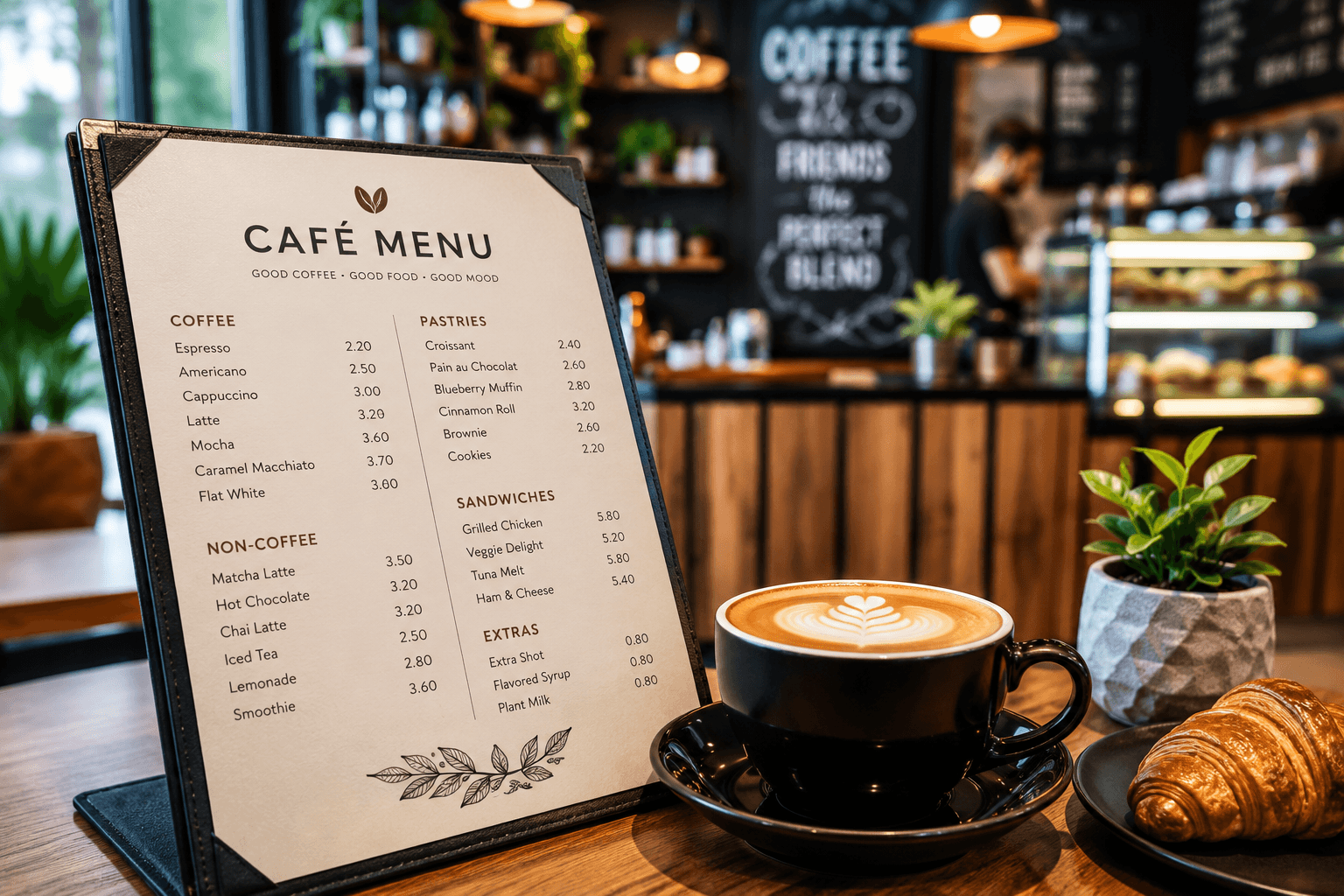
A cafe menu is more than just a list of drinks and snacks. It reflects the personality of a cafe, guides customer choices, and often determines whether a first-time visitor becomes a regular. Whether you’re a coffee lover exploring new spots or a cafe owner trying to design the perfect offering, understanding what goes into a good cafe menu can make a real difference.
What Makes a Cafe Menu Different from a Restaurant Menu
Unlike a full restaurant menu, a cafe menu is usually shorter, simpler, and centered around beverages, light bites, and quick comfort food. The focus tends to be on coffee, tea, pastries, sandwiches, and desserts rather than elaborate multi-course meals.
This simplicity is intentional. People visiting cafes often want a relaxed experience, a quiet corner to work, or a quick catch-up with a friend. A cluttered menu with too many options can overwhelm customers and slow down service, which is why most successful cafes keep their offerings focused and easy to navigate.
This is one reason many businesses regularly update their offerings instead of relying on the same layout year after year. If you’re interested in how a well-structured food menu evolves over time, this detailed guide on DQ Menu Guide 2026 explores menu organization, pricing, and popular menu categories in depth.
The Core Categories Found in Most Cafe Menus
A typical cafe menu is divided into a few clear categories that make ordering intuitive. Hot beverages usually come first, featuring espresso-based drinks like lattes, cappuccinos, and americanos, along with regular brewed coffee and tea varieties.
Cold beverages follow closely, including iced coffee, cold brew, frappes, and smoothies, especially popular during warmer months. Many cafes also include a small selection of specialty or seasonal drinks to keep things interesting throughout the year.
Food items on a cafe menu generally include pastries, muffins, croissants, and cookies for those craving something sweet with their drink. Savory options like sandwiches, wraps, and light salads cater to customers looking for a proper snack or a quick lunch.
Why Menu Design Matters for a Cafe’s Success
The way a cafe menu is designed directly impacts customer experience and, ultimately, sales. A well-organized menu helps customers make quicker decisions, which reduces wait times and improves overall efficiency for the staff.
Visual hierarchy plays a big role here. Items that a cafe wants to highlight, such as signature drinks or bestsellers, are often placed in prominent positions or given slight visual emphasis. This subtle design choice can influence what customers choose without feeling pushy or overly promotional.
Pricing structure also matters. Most cafes avoid using currency symbols directly next to prices, as studies have shown this can reduce the psychological feeling of spending money, encouraging slightly higher order values.
The Role of Seasonal and Specialty Items
Many cafes refresh their cafe menu periodically to include seasonal ingredients or limited-time offerings. Pumpkin spice drinks in autumn, refreshing fruit-based coolers in summer, or festive holiday treats around winter are common examples.
This rotation keeps regular customers curious and gives them a reason to keep coming back. It also allows cafes to experiment with new flavors and gather feedback before deciding whether an item deserves a permanent spot on the standard offering.
Specialty items, such as a signature latte with a unique syrup blend or a locally inspired pastry, help a cafe stand out from competitors. These unique additions often become the very reason customers recommend a particular cafe to friends and family.
How Pricing Strategy Shapes Customer Choices
Pricing on a cafe menu isn’t just about covering costs; it’s a strategic tool. Cafes often use a tiered pricing approach, offering a basic drink at an accessible price point while providing premium versions with add-ons like extra shots, flavored syrups, or plant-based milk alternatives.
This tiered structure allows customers with different budgets to find something suitable, while also giving cafes an opportunity to increase average order value through upgrades. Bundling items, such as a drink and pastry combo at a slightly discounted rate, is another common tactic used to encourage larger purchases.
Transparent pricing builds trust as well. Customers appreciate knowing exactly what they’re paying for without hidden charges for customization, which is why many modern cafes list add-on costs clearly next to the base price.
Health-Conscious and Dietary Options on Modern Cafe Menus
Today’s customers are increasingly mindful of what they consume, and cafes have adapted accordingly. Most modern cafe menu options now include dairy-free milk alternatives like almond, oat, or soy milk as standard choices rather than special requests.
Sugar-free syrups, low-calorie sweeteners, and decaffeinated coffee options have also become common, catering to customers with specific dietary preferences or health goals. Gluten-free pastries and vegan snack options are increasingly available too, reflecting broader shifts in consumer eating habits.
This inclusivity isn’t just a trend; it’s become an expectation. Cafes that fail to offer at least basic dietary accommodations risk losing customers to competitors who do, especially in urban areas with health-conscious populations.
The Growing Influence of Digital and QR Code Menus
Technology has changed how customers interact with a cafe menu. QR code menus, which became widely popular during the pandemic, allow customers to view options directly on their phones without needing a printed copy.
This shift offers several advantages. Digital menus can be updated instantly when prices change or items sell out, eliminating the need for costly reprints. They also allow cafes to include detailed descriptions, ingredient lists, or even photos without cluttering a physical page.
Some cafes have gone further, integrating online ordering directly into their digital menu system. This allows customers to browse, customize, and pay from their table or even before arriving, streamlining the entire experience for busy customers. Whether a business uses printed cards or digital ordering systems, keeping menu information clear and easy to navigate is essential. The DQ Menu Guide 2026 is another practical example of how modern menus present products in a customer-friendly format while keeping information organized.
How Cafes Balance Variety with Simplicity
One of the biggest challenges in designing a cafe menu is finding the right balance between variety and simplicity. Too few options can feel limiting, while too many can create decision fatigue and slow down operations.
Successful cafes often solve this by offering a core lineup of reliable favorites alongside a small rotating selection of new or seasonal items. This way, regular customers always find their usual order while newcomers get a sense of the cafe’s creativity and range.
Staff training also plays a role in this balance. When baristas understand the menu well and can confidently recommend items based on customer preferences, it reduces the pressure on the menu itself to explain everything in detail.
The Emotional Connection Behind a Good Cafe Menu
Beyond practicality, a cafe menu often carries an emotional element. The names given to drinks, the descriptions used, and even the layout can evoke feelings of comfort, nostalgia, or excitement.
A well-crafted description for a simple hot chocolate, for instance, can transform it from an ordinary drink into something customers look forward to ordering. This storytelling aspect is often what separates a memorable cafe experience from a purely transactional one.
Local and independent cafes, in particular, use their menus to reflect community identity, sometimes naming drinks after local landmarks or incorporating regional flavors that resonate with their customer base.
Tips for Reading a Cafe Menu Like a Local
For customers new to a particular cafe, understanding a cafe menu can feel intimidating at first, especially with unfamiliar terms like macchiato, cortado, or flat white. Taking a moment to read descriptions rather than just drink names can help clarify what each option actually offers.
Asking staff for recommendations is also a great way to explore a menu without feeling overwhelmed. Most baristas are happy to explain differences between similar-sounding drinks or suggest something based on personal taste preferences.
Over time, regular visits help customers become familiar with a cafe’s specific offerings, making future visits quicker and more enjoyable as favorite items become second nature to order.
Final Thoughts on the Value of a Well-Planned Cafe Menu
A cafe menu is far more than a simple pricing list; it’s a reflection of a cafe’s identity, values, and understanding of its customers. From layout and pricing to seasonal creativity and dietary inclusivity, every detail contributes to the overall experience. Understanding the broader history and culture of cafés can also provide valuable context, as explained in this article about the café. A thoughtfully designed menu helps create memorable customer experiences while strengthening long-term loyalty.
For cafe owners, investing time in thoughtful menu design pays off through better customer satisfaction and stronger loyalty. For customers, taking a little time to explore a menu beyond the usual order can lead to discovering a new favorite drink or snack.
Frequently Asked Questions
What should a basic cafe menu include?
A basic setup typically includes hot and cold beverages, a few pastries or baked goods, and one or two savory snack options to cover different customer needs throughout the day.
How often should a cafe update its menu?
Most cafes review their offerings every few months, with seasonal updates being common to keep things fresh while maintaining core favorites that customers rely on.
Why do some cafes avoid listing currency symbols on prices?
This is a psychological pricing technique meant to reduce the perceived weight of spending, which can subtly encourage customers to order more.
Are digital menus replacing printed ones completely?
Not entirely. Many cafes use both, offering QR code access for convenience while still keeping a few printed copies available for customers who prefer them.
How can a cafe cater to dietary restrictions effectively?
Offering clearly labeled dairy-free, sugar-free, and gluten-free options, along with training staff to answer ingredient-related questions, helps accommodate a wider range of dietary needs.
What makes a cafe menu feel welcoming to first-time visitors?
Clear descriptions, organized categories, and helpful staff recommendations all contribute to making a new visitor feel comfortable navigating unfamiliar options.
